



Phase change heatsink
Phase change heat sinks: What they are and how they work
Phase-change heat sinks are advanced cooling systems used to control the temperature of high-performance electronic components. Unlike traditional heat sinks, these devices exploit the physical principle of a fluid's change of state to transfer heat extremely efficiently.
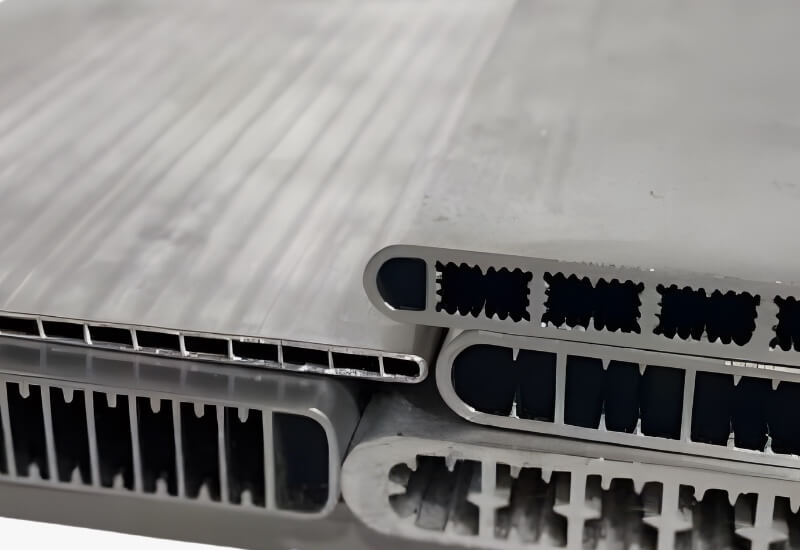
How a phase-change heatsink works:
Inside the heatsink is a sealed fluid that absorbs the heat produced by the electronic component. As the temperature rises, the fluid evaporates, turning into vapor. This vapor moves to the cooler areas of the heatsink, where it cools and returns to a liquid state. The liquid then returns to the hot area, creating a continuous cooling cycle.
This process allows large amounts of heat to be transferred quickly and uniformly, improving the performance and reliability of devices.
The main advantages
I dissipatori a cambio di fase offrono numerosi vantaggi:
High efficiency in heat dissipation
Absence of moving mechanical parts
Greater reliability over time
Compact size compared to the performance offered
Completely passive operation (no additional energy consumption)
Main applications
This technology is widely used in various sectors:
High-performance computers and workstations
Server e data center
Professional LED lighting
Industrial electronics
Automotive and aerospace
Main applications
As the performance of electronic devices increases, heat management has become a key challenge. Phase-change heat sinks represent a modern, efficient, and reliable solution for ensuring high performance and a longer lifespan for electronic components.